Custom Adaptor Welding: Producing 222, 226, and DOE End-Configurations
Views : 1409
Author : indrofiltermachine.com
Update time : 2026-07-06 12:25:24
Custom Adaptor Welding: Producing 222, 226, and DOE End-Configurations Introduction
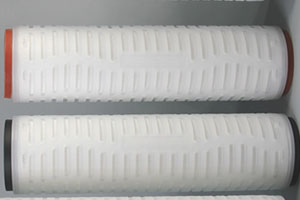
Filter cartridges are used in a wide variety of industrial filtration systems, from water treatment plants and pharmaceutical manufacturing to food and beverage processing, electronics, and chemical production. While the filtration media determines the cartridge's ability to remove contaminants, the end configuration plays an equally important role in ensuring proper installation, reliable sealing, and compatibility with filter housings. Among the most common end configurations are 222, 226, and DOE (Double Open End) designs. Each configuration is engineered for specific filtration systems and operating conditions. Producing these adaptor styles requires precise welding technology, accurate positioning, and strict quality control to ensure leak-proof performance and long service life.
Modern automatic adaptor welding machines have transformed filter cartridge manufacturing by delivering consistent weld quality, high production efficiency, and the flexibility to produce multiple cartridge designs on the same production line.
This article explores the manufacturing process of custom adaptor welding, the characteristics of 222, 226, and DOE end configurations, and the importance of advanced welding technology in producing reliable filter cartridges.
Understanding Filter Cartridge End Configurations
The adaptor is the interface between the filter cartridge and the filter housing. It provides secure installation, proper sealing, and easy cartridge replacement.
Different filtration systems require different adaptor designs. 222 End Configuration
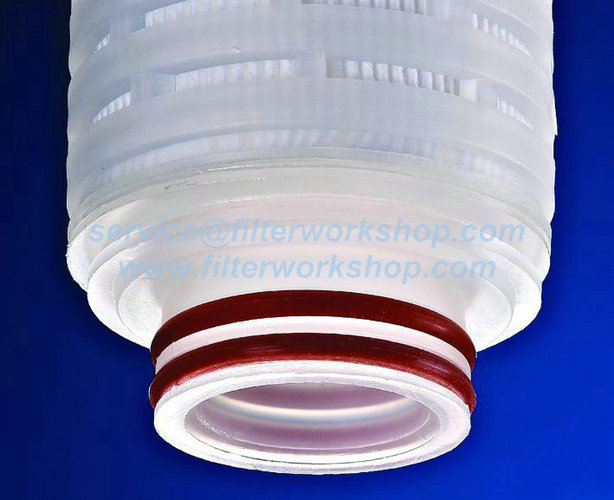
The 222 adaptor features a double O-ring sealing design that provides excellent leak resistance. Its advantages include:
Secure installation
Reliable sealing under pressure
Easy cartridge replacement
Excellent chemical compatibility
Suitable for sanitary filtration systems
The 222 configuration is widely used in pharmaceutical, food and beverage, and high-purity water applications.
226 End Configuration
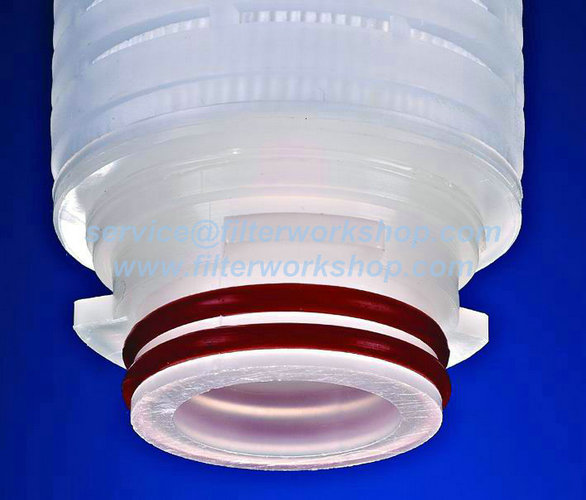
The 226 adaptor is designed with locking tabs and O-ring sealing, providing additional mechanical security. Its benefits include:
Strong locking mechanism
High pressure resistance
Excellent vibration resistance
Secure positioning during operation
This design is commonly found in industrial water treatment, chemical processing, and high-flow filtration systems.
DOE (Double Open End)
DOE cartridges are open at both ends and are installed using spring-loaded or compression sealing mechanisms within the housing. Advantages include:
Simple construction
Cost-effective design
Easy maintenance
Compatibility with many standard filter housings
DOE cartridges are widely used in general industrial filtration, water purification, and pre-filtration systems.
The Importance of Precision Adaptor Welding
Adaptor welding is one of the final assembly steps in filter cartridge production. Poor alignment or weak welding can compromise the cartridge's overall performance.
Precision welding ensures:
Leak-proof sealing
Accurate adaptor positioning
High mechanical strength
Reliable housing compatibility
Long service life
Consistent product quality
Even small deviations during welding may lead to installation difficulties or fluid bypass, reducing filtration efficiency.
Automated Adaptor Welding Process
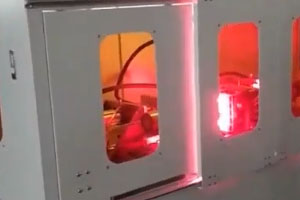
Modern production lines use automated adaptor welding machines to improve accuracy and productivity.
A typical process includes the following steps: Component Positioning
The filter cartridge and adaptor are automatically positioned using precision fixtures to ensure perfect alignment before welding. Controlled Heating
The adaptor and cartridge surfaces are heated under carefully controlled conditions to achieve the proper melting temperature without damaging surrounding components. Welding and Bonding
After heating, the adaptor is pressed onto the cartridge using controlled force, creating a strong molecular bond between the plastic components. Cooling
The welded assembly is held in position while cooling to maintain dimensional accuracy and prevent deformation.
Automation ensures every cartridge follows the same production parameters, resulting in consistent weld quality across large production volumes.
Infrared Welding for Superior Results
Many manufacturers now prefer non-contact infrared welding technology for adaptor assembly.
Unlike traditional hot plate welding, infrared welding heats plastic surfaces using radiant energy without direct contact. Its advantages include:
Uniform heat distribution
Cleaner weld surfaces
Reduced material deformation
Improved weld consistency
Strong molecular bonding
Lower equipment maintenance
Advanced infrared systems equipped with water-cooling technology provide even greater temperature stability during continuous production. This helps maintain consistent welding quality while minimizing overheating and material sticking.
The result is a durable, leak-proof adaptor connection that performs reliably under demanding operating conditions.
Flexibility for Multiple Cartridge Designs
One of the greatest advantages of modern adaptor welding machines is their ability to accommodate different cartridge specifications.
Quick-change tooling and programmable controls allow manufacturers to switch efficiently between:
222 end configurations
226 end configurations
DOE cartridges
Various cartridge lengths
Different cartridge diameters
Multiple plastic materials
This flexibility enables manufacturers to respond quickly to customer requirements without lengthy production interruptions.
Quality Control During Adaptor Production
Producing reliable filter cartridges requires comprehensive quality inspection throughout the welding process.
Common quality control procedures include: Visual Inspection
Operators verify:
Weld appearance
Adaptor alignment
Surface cleanliness
Overall assembly quality
Dimensional Inspection
Measurements confirm:
Adaptor position
Overall cartridge length
Diameter accuracy
Critical installation dimensions
Leak Testing
Leak tests ensure the welded adaptor forms a complete seal with no fluid bypass. Pressure Testing
Pressure resistance testing verifies that the welded joint can withstand normal operating conditions without failure. Mechanical Strength Testing
Pull and torque tests evaluate the strength of the adaptor connection to ensure long-term durability.
These inspections help guarantee that every cartridge meets customer specifications and industry standards.
Applications Across Multiple Industries
Filter cartridges with 222, 226, and DOE end configurations are used in a broad range of filtration applications.
Typical industries include:
Water treatment
Reverse osmosis pre-filtration
Food and beverage processing
Pharmaceutical manufacturing
Biotechnology
Electronics and semiconductor production
Chemical processing
Power generation
Oil and gas
Industrial manufacturing
Each industry requires dependable adaptor connections to ensure safe, efficient, and contamination-free filtration.
Conclusion
Adaptor welding is a critical step in manufacturing high-performance filter cartridges. Whether producing 222, 226, or DOE end configurations, precision welding ensures reliable sealing, accurate installation, and long-lasting performance.
By integrating automated adaptor welding machines, advanced non-contact infrared heating technology, and rigorous quality control, manufacturers can consistently produce filter cartridges that meet the demanding requirements of modern filtration systems. Flexible production equipment also allows rapid changeovers between different cartridge designs, helping manufacturers serve diverse customer needs while maintaining high productivity.
As filtration technologies continue to evolve, custom adaptor welding will remain an essential part of filter cartridge manufacturing, enabling the production of durable, leak-proof cartridges that deliver reliable performance across water treatment, pharmaceutical, food and beverage, chemical, and industrial applications worldwide.