High-Flow Cartridge Assembly: Managing Large Diameter Production Challenges
High-flow filter cartridges have become increasingly important in modern industrial filtration systems. Industries such as water treatment, oil and gas, power generation, food and beverage, and chemical processing demand filtration solutions capable of handling high flow rates while maintaining excellent filtration efficiency and long service life. High-flow cartridges are designed with significantly larger diameters and higher dirt-holding capacities compared to traditional pleated filter cartridges.
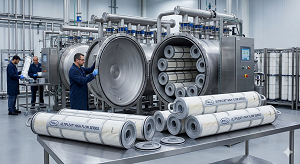
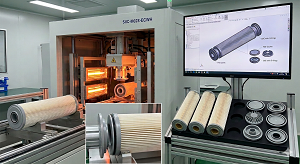 However, the production and assembly of large-diameter high-flow cartridges present several manufacturing challenges. From structural design and component compatibility to welding technology and automation control, every stage of the assembly process must be carefully optimized. This article explores the key challenges involved in high-flow cartridge assembly and the practical solutions manufacturers use to ensure reliable and efficient production.
Understanding High-Flow Cartridge Design
High-flow cartridges differ from conventional filter cartridges primarily in size and performance capability. Typical standard cartridges measure 2.5 to 2.75 inches in diameter, while high-flow cartridges can reach diameters of 6 inches or even larger. The increased diameter allows the cartridge to process significantly higher liquid volumes while maintaining low pressure drop.
A typical high-flow filter cartridge consists of several main components:
- Pleated filter media
- Inner support core
- Outer protective cage
- Plastic end caps
- Sealing elements such as O-rings
- Protective outer mesh or sleeve
Because of the larger structure, each component must maintain excellent dimensional accuracy and mechanical strength. Even minor deviations in component quality can affect assembly efficiency and final product performance.
Challenge 1: Maintaining Structural Stability
One of the primary difficulties in assembling large-diameter cartridges is maintaining structural stability during production. The larger pleated filter pack tends to be more flexible and less rigid than smaller cartridges.
During assembly, improper support can lead to:
- Pleat deformation
- Uneven pleat spacing
- Collapse of the filter pack
- Difficulty inserting the inner core or outer cage
To solve this issue, manufacturers often use reinforced plastic inner cores and outer cages. These structural components provide mechanical support to the pleated media and maintain the cartridge shape during operation.
Injection-molded plastic structures are commonly used because they offer:
- High dimensional consistency
- Excellent corrosion resistance
- Lightweight yet strong mechanical properties
- Compatibility with automated assembly systems
Proper structural support ensures the cartridge can withstand high flow pressure without deformation.
Challenge 2: Precision of Large Plastic Components
High-flow cartridges require larger plastic components than standard filters. These include large-diameter end caps, outer cages, and inner cores. Producing these parts with consistent quality can be technically demanding.
Key issues include:
- Mold deformation during injection molding
- Uneven cooling of plastic materials
- Dimensional tolerance control
- Warping or shrinkage
Large injection molds must be carefully designed to ensure uniform material flow and cooling distribution. High-quality polypropylene materials are commonly used because they offer excellent chemical resistance and strong bonding characteristics during welding.
Manufacturers also use strict quality inspection processes to ensure all plastic components meet precise tolerances before entering the assembly line.
Challenge 3: Handling Large Pleated Filter Packs
The pleated filter pack is the heart of the cartridge. In high-flow filters, the pleated pack has a much larger circumference, which introduces handling challenges during assembly.
Some common difficulties include:
- Maintaining consistent pleat spacing
- Preventing pleat damage during transfer
- Ensuring proper alignment with end caps
- Avoiding compression or distortion
To address these issues, automated pleat positioning systems and guided assembly fixtures are often used. These systems help maintain the geometry of the pleated pack throughout the production process.
Support mesh or netting is also frequently added to the pleated media to improve structural integrity and prevent pleat collapse during operation.
Challenge 4: End Cap Welding for Large Diameter Filters
End cap welding is one of the most critical steps in high-flow cartridge assembly. The large diameter significantly increases the complexity of this process.
Traditional welding systems designed for standard cartridges may not provide uniform heating across a large surface area. This can result in:
- Uneven welding seams
- Weak bonding areas
- Potential leakage paths
- Product failure during operation
Advanced welding technology is required to ensure consistent bonding between the filter media and plastic end caps.
Modern infrared welding systems are widely used for large-diameter filter cartridges. Infrared heating provides uniform energy distribution and precise temperature control. Compared with traditional heating methods, advanced infrared systems offer several advantages:
- Even heating across large welding surfaces
- Reduced thermal deformation
- Strong and consistent weld strength
- Faster production cycles
Some advanced systems also incorporate water-cooled structures to stabilize the heating process and maintain consistent welding quality during continuous production.
Challenge 5: Alignment and Assembly Accuracy
Because high-flow cartridges contain larger components, precise alignment becomes more critical during assembly. Any misalignment between the filter pack, inner core, and end caps can lead to:
- Poor sealing performance
- Mechanical stress on components
- Reduced filtration efficiency
- Shorter product lifespan
To prevent these issues, modern assembly lines utilize precision fixtures and servo-controlled positioning systems. These systems ensure that all components are correctly aligned before welding or final assembly.
Automated inspection systems can also verify the positioning of components before the welding process begins, reducing the risk of defects.
Challenge 6: Production Efficiency and Automation
High-flow cartridges are commonly used in large-scale industrial filtration systems, which require high production capacity. However, assembling large cartridges manually is inefficient and can lead to inconsistent product quality.
To meet growing market demand, many manufacturers have introduced automated assembly lines designed specifically for large-diameter cartridges.
Automated systems can perform tasks such as:
- Inner core insertion
- Pleated pack positioning
- End cap welding
- Component alignment
- Final inspection
Servo-driven assembly systems provide precise motion control, improving both production speed and repeatability. Automation also reduces labor costs while ensuring consistent manufacturing standards.
Quality Control in High-Flow Cartridge Manufacturing
Given the complexity of high-flow cartridge assembly, strict quality control is essential. Manufacturers typically implement multiple inspection stages throughout the production process.
Key quality checks include:
- Dimensional inspection of plastic components
- Pleat integrity verification
- Welding strength testing
- Leak testing
- Pressure resistance testing
Advanced testing equipment can simulate real operating conditions to ensure that the finished cartridge meets industrial performance requirements.
Consistent quality control helps prevent failures in critical filtration applications where reliability is essential.
Future Trends in High-Flow Cartridge Production
As industrial filtration demands continue to increase, high-flow cartridge designs will continue evolving. Several trends are shaping the future of this product segment.
1. Improved Materials
New polymer materials with enhanced strength and chemical resistance are being developed for filter components. These materials improve durability and expand the range of compatible filtration applications.
2. Advanced Welding Technologies
Innovative welding systems with improved temperature control and energy efficiency are helping manufacturers achieve stronger and more reliable end cap bonding.
3. Smart Manufacturing
Digital monitoring systems and smart sensors are increasingly integrated into filter cartridge assembly lines. These technologies allow real-time monitoring of temperature, pressure, and alignment during production.
4. Higher Automation Levels
Fully automated production lines are becoming more common, enabling manufacturers to produce large volumes of high-flow cartridges while maintaining consistent quality.
Conclusion
High-flow filter cartridges play a vital role in modern industrial filtration systems due to their ability to process large liquid volumes with low pressure drop. However, the assembly of large-diameter cartridges introduces significant manufacturing challenges.
Maintaining structural stability, producing precise plastic components, handling large pleated media packs, ensuring reliable end cap welding, and achieving accurate assembly alignment are all critical factors in successful production.
By adopting advanced manufacturing technologies, automated assembly systems, and strict quality control procedures, manufacturers can effectively overcome these challenges. As filtration technology continues to evolve, innovations in materials, welding methods, and smart manufacturing will further improve the efficiency and reliability of high-flow cartridge production.
Efficient assembly processes not only ensure product quality but also support the growing global demand for high-performance industrial filtration solutions.