Understanding the Length Connecting Process — Scaling from 10” to 40” Filters
Views : 3026
Author : indrofiltermachine.com
Update time : 2026-02-23 15:57:10
Understanding the Length Connecting Process — Scaling from 10” to 40” Filters
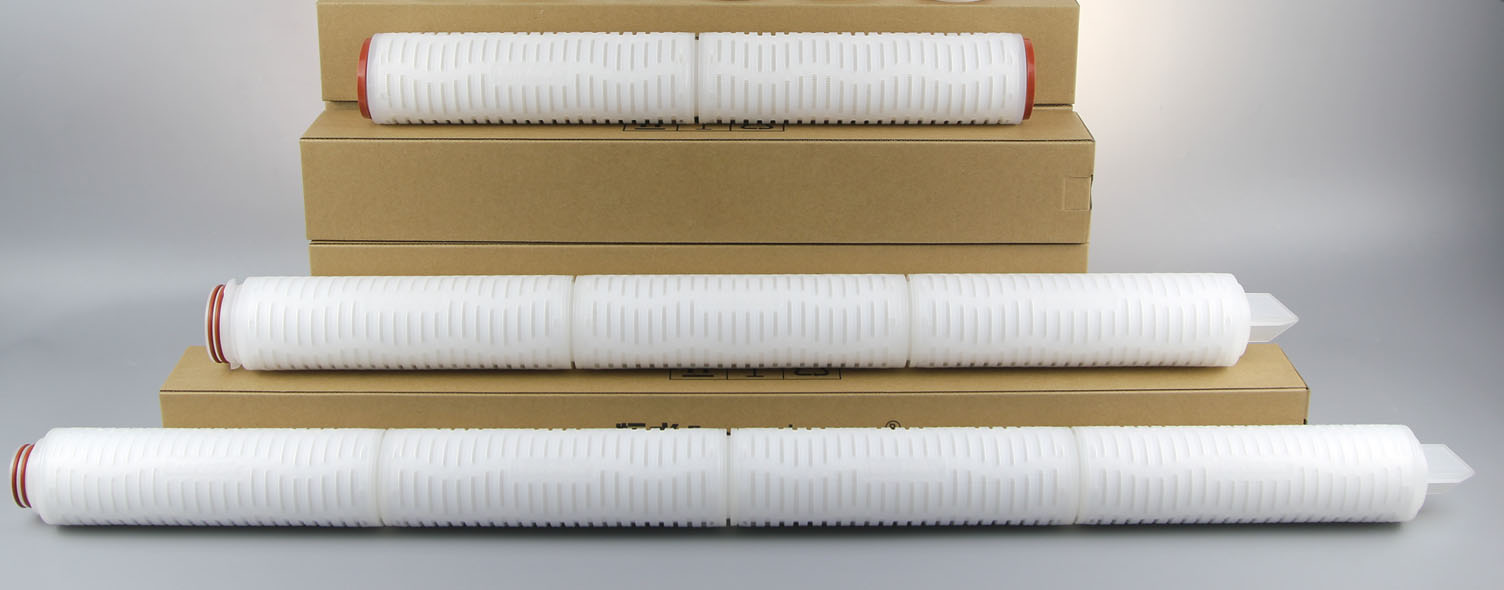
In industrial liquid and gas filtration systems, filter length plays a critical role in determining flow capacity, dirt holding ability, and system efficiency. While 10-inch filter cartridges are widely used in standard applications, many industrial processes demand longer configurations such as 20”, 30”, or 40” elements to handle higher flow rates and longer service cycles.
Scaling from 10” to 40” filters is not simply a matter of increasing size. It requires a precise and technically controlled length connecting process to ensure structural integrity, sealing reliability, and filtration consistency across the extended cartridge. Understanding this process is essential for manufacturers, engineers, and plant operators aiming to achieve stable high-performance filtration.
This article explores the engineering principles, manufacturing technologies, structural challenges, and quality control standards involved in scaling filter cartridges from 10” to 40”. 1. Why Scale Filter Length?
Before discussing the connection process itself, it is important to understand why longer filters are required. Increased Flow Capacity
A 40” filter cartridge offers approximately four times the filtration surface area of a 10” cartridge (depending on pleat density and structure). This allows:
Higher flow rates
Lower initial pressure drop
Reduced number of cartridges in housing
For large-scale systems, fewer but longer filters simplify housing design and reduce installation complexity. Extended Service Life
Longer filters hold more contaminants due to increased media area. This results in:
Longer replacement intervals
Lower maintenance frequency
Reduced downtime
In industries such as water treatment, pharmaceuticals, food & beverage, and chemicals, this extended operational cycle significantly improves productivity.
2. The Engineering Challenge of Length Scaling
While the benefits are clear, increasing filter length introduces several technical challenges. Structural Stability
A 10” cartridge has relatively low axial stress during operation. However, a 40” cartridge must withstand:
Higher internal pressure forces
Axial compression stress
Potential bending or deflection
Without proper structural reinforcement, longer cartridges may collapse, warp, or experience uneven flow distribution. Alignment Precision
When connecting multiple 10” segments to create 20”, 30”, or 40” cartridges, perfect axial alignment is critical. Even minor misalignment can cause:
Uneven pleat compression
Media distortion
Leakage at joint sections
Reduced filtration efficiency
Sealing Integrity
Each connection point represents a potential weak area. The joint must be:
Mechanically strong
Chemically resistant
Free of micro-gaps
Able to withstand long-term pressure cycling
The connecting process must therefore integrate both mechanical bonding and precise thermal control.
3. Methods Used in Length Connecting
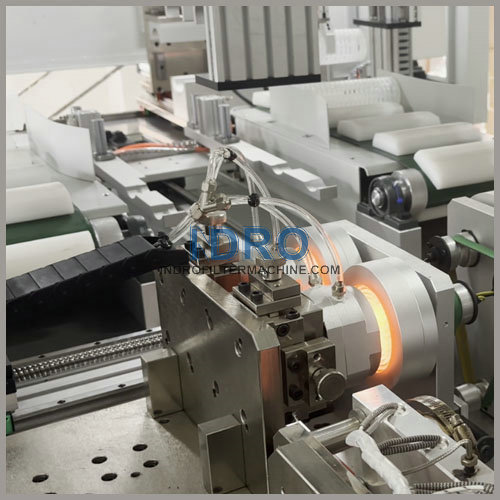
Several manufacturing techniques are used to scale from 10” to 40” filter cartridges. The most common include: 1) Thermal Welding Connection
Thermal welding uses controlled heat to fuse plastic components or support cores together.
Key features:
Creates seamless structural bonds
Maintains consistent internal diameter
Eliminates need for adhesives
Provides strong pressure resistance
Precision temperature control is essential. Overheating may deform components, while insufficient heat leads to weak joints. 2) Infrared Welding Technology
Infrared heating is increasingly preferred because it provides:
Non-contact heating
Uniform thermal distribution
Reduced material stress
Cleaner weld surfaces
Infrared welding ensures that connection surfaces are evenly melted before fusion, producing a stronger and more consistent bond compared to traditional contact heating. 4. Internal Core and Outer Cage Considerations
When scaling length, internal support structures must also be extended or connected properly. Inner Core Reinforcement
The inner core supports the pleated media against inward pressure. For 40” filters:
Core thickness must be optimized
Rib structure must prevent collapse
Joint sections must align perfectly
Improper core joining can create flow turbulence and stress concentration points. Outer Cage Stability
The outer cage protects pleats from outward pressure and handling damage. During length extension:
Cage joints must remain rigid
Pleat spacing must stay consistent
Radial strength must not decrease
Advanced manufacturing ensures that both inner core and outer cage maintain structural symmetry across the full 40” length.
5. Pleated Media Continuity
One of the most critical aspects of the length connecting process is maintaining pleat continuity. Avoiding Dead Zones
If media is not aligned correctly at connection points, “dead filtration zones” may form. These areas:
Reduce effective filtration area
Increase local pressure drop
Shorten service life
Continuous pleat bonding ensures:
Uniform contaminant distribution
Balanced flow
Stable differential pressure
Media Bonding at Joint Areas
In high-quality manufacturing, pleated media sections are bonded carefully before final structural welding. This ensures:
No bypass channels
No weak seams
Stable pleat geometry
Maintaining consistent pleat height across 40” length is especially critical for high-flow applications.
6. End Cap Alignment in Extended Filters
End caps must remain perfectly centered relative to the entire 40” structure.
When scaling length:
Axial straightness must be controlled
Parallelism must be maintained
Sealing surfaces must be uniform
Any slight deviation can result in:
Improper housing fit
Seal leakage
Uneven compression
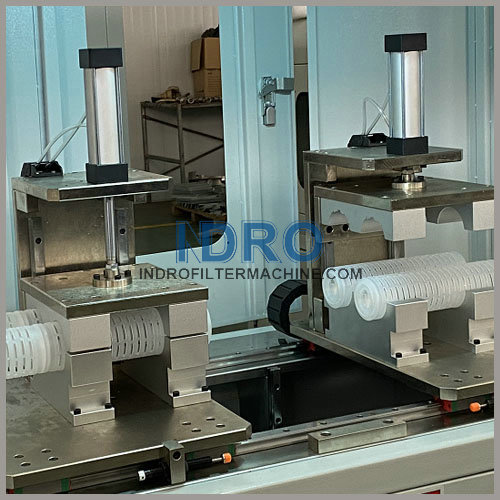
Precision fixtures and automated assembly systems are often used to guarantee dimensional stability during final end cap welding.
7. Quality Control in Length Connecting
Scaling from 10” to 40” increases manufacturing complexity, which makes quality control even more critical. Dimensional Inspection
Manufacturers typically check:
Total length tolerance
Straightness deviation
Concentricity
Joint symmetry
Tight tolerances ensure compatibility with standard filter housings. Pressure Testing
Each extended cartridge must undergo:
Bubble point testing
Integrity testing
Burst pressure verification
This confirms that joint sections are as strong as the original 10” structure. Flow Performance Validation
Testing includes:
Initial pressure drop measurement
Flow rate confirmation
Particle retention efficiency
A properly connected 40” filter should perform equivalently to four integrated 10” units without performance degradation.
8. Advantages of Proper Length Connecting
When the connecting process is optimized, scaling provides major operational benefits: Reduced Housing Quantity
Instead of using four 10” cartridges in separate housings, one 40” cartridge simplifies installation and piping. Lower Maintenance Cost
Fewer cartridges mean:
Faster changeout
Lower labor requirements
Reduced sealing points
Improved System Efficiency
Longer cartridges offer:
More stable flow distribution
Lower pressure drop over time
Extended dirt holding capacity
These improvements directly reduce energy consumption and operational costs.
9. Application Areas for 40” Filters
Extended-length filters are widely used in:
Industrial water treatment systems
Pharmaceutical process filtration
Food & beverage production
Microelectronics manufacturing
Chemical processing plants
Large-scale RO pre-filtration systems
In these sectors, scaling from 10” to 40” is often essential for meeting production demand.
10. Future Trends in Length Scaling
As industrial processes grow more automated and high-capacity systems become standard, length connecting technology continues to evolve.
Emerging developments include:
Fully automated robotic welding systems
Real-time thermal monitoring
AI-driven alignment control
High-strength composite core materials
These innovations improve joint reliability while reducing cycle time and material stress.
Conclusion
Scaling filter cartridges from 10” to 40” is far more complex than simply increasing length. It requires advanced engineering in structural reinforcement, thermal bonding, pleat continuity, alignment precision, and quality control.
A properly executed length connecting process ensures that a 40” cartridge delivers:
Structural integrity equal to shorter units
Consistent filtration efficiency
Stable pressure performance
Extended service life
For filtration manufacturers and industrial users, understanding this process is key to achieving reliable high-flow filtration systems.
As industrial demands continue to expand, mastering length connecting technology will remain essential for delivering high-performance filtration solutions capable of supporting modern production environments.